
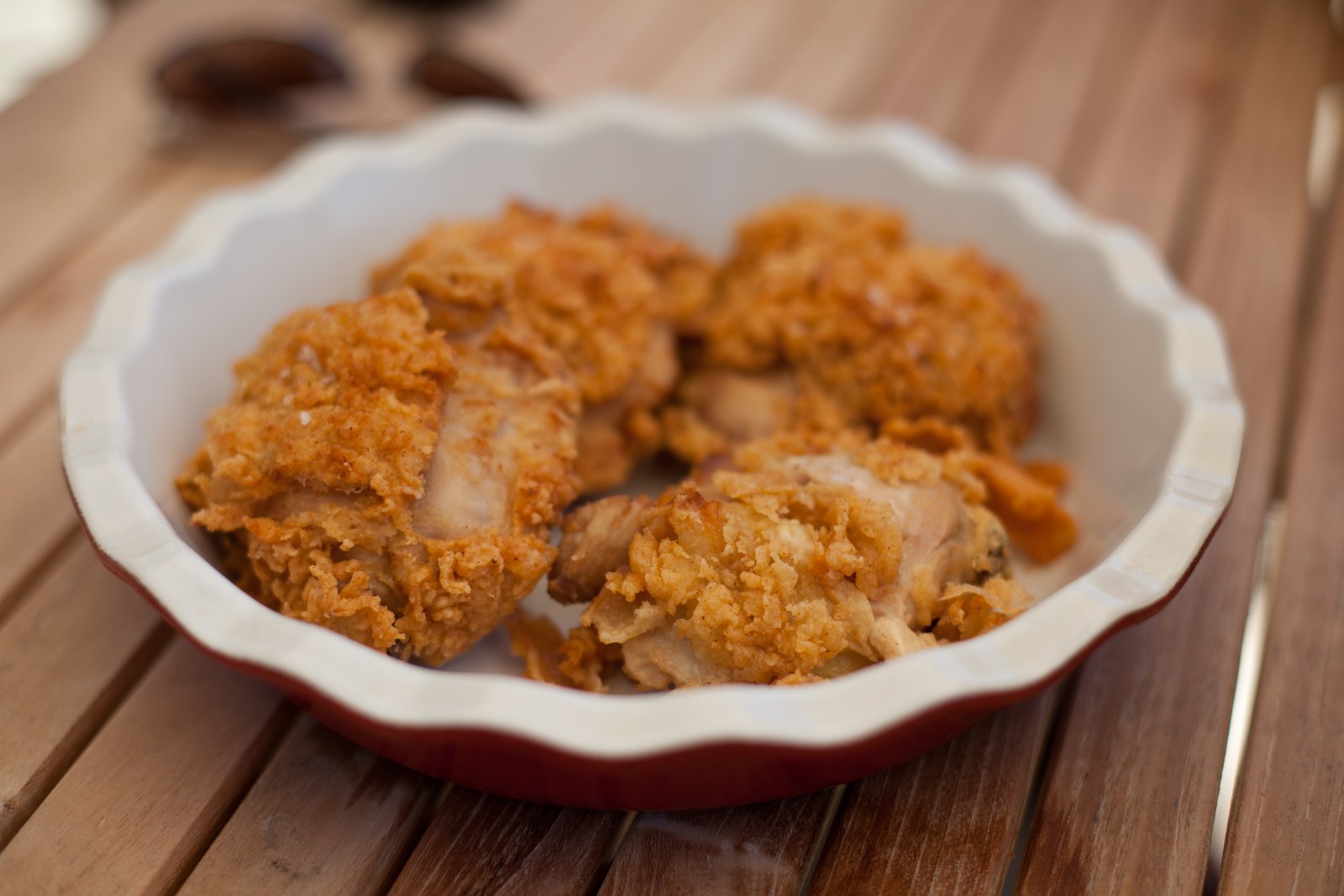
Crispy Homemade Fried Chicken Recipe (Buttermilk Method)
Crispy homemade fried chicken with a buttermilk soak, seasoned flour coating, exact quantities, safe cooking temperatures, crunch tips, and an FAQ.
Crispy Homemade Fried Chicken Recipe (Buttermilk Method)
Good fried chicken at home comes down to three things: a buttermilk soak, a well-seasoned flour coating, and oil that stays at the right heat. Get those right and you get a crust that stays crunchy with juicy meat underneath. You don't need a deep fryer, just a heavy pot, a thermometer if you have one, and a bit of patience between batches.
Servings: 4 Prep time: 20 minutes, plus 2 to 12 hours marinating Cook time: 25 to 35 minutes Equipment: large bowl, wide shallow dish, heavy deep pot or pan, wire rack set over a tray, food thermometer (recommended)
Ingredients
Buttermilk marinade
- 1.2 kg bone-in chicken pieces (thighs and drumsticks work best; wings are fine too)
- 480 ml buttermilk (or 450 ml full-fat milk mixed with 2 tbsp lemon juice or white vinegar, rested 10 minutes)
- 1.5 tsp fine salt
- 1 tsp black pepper
- 1 tsp paprika
- 1 tsp garlic powder
- 0.5 tsp onion powder
- 0.5 tsp cayenne pepper (optional)
Seasoned flour coating
- 250 g all-purpose flour
- 40 g cornstarch
- 2 tsp fine salt
- 1.5 tsp black pepper
- 2 tsp paprika
- 1.5 tsp garlic powder
- 1 tsp onion powder
- 1 tsp dried thyme or oregano
- 0.5 tsp baking powder
- 0.5 tsp cayenne pepper (optional)
For frying
- Neutral oil with a high smoke point (sunflower, canola, or vegetable oil), enough to fill your pot 4 to 5 cm deep
- Optional to finish: a pinch of fine salt and lemon wedges
Steps
-
Dry the chicken. Pat the pieces dry with paper towels. Don't rinse raw chicken under the tap. Food safety agencies advise against it because washing doesn't remove harmful bacteria and the splashes spread them around your sink and counters. Cooking is what makes it safe.
-
Make the marinade. In a large bowl, whisk the buttermilk with the salt, pepper, paprika, garlic powder, onion powder, and cayenne. Add the chicken and turn until every piece is coated. Cover and refrigerate for at least 2 hours, or up to 12 hours.
-
Mix the coating. In a wide shallow dish, whisk together the flour, cornstarch, salt, pepper, paprika, garlic powder, onion powder, thyme, baking powder, and cayenne.
-
Heat the oil. Pour oil into a heavy pot to a depth of 4 to 5 cm. Heat over medium until it reaches 170 to 175°C. Without a thermometer, drop in a pinch of flour: it should sizzle steadily without burning right away. Never fill the pot more than halfway, and keep a lid nearby.
-
Coat the chicken. Lift a piece from the marinade, let the extra drip off for a second, then press it firmly into the flour on all sides. For a thicker, craggier crust, dip it back into the marinade and coat it a second time. Set coated pieces on a wire rack for 5 minutes so the coating sets and won't fall off in the oil.
-
Fry in batches. Lower 3 or 4 pieces into the oil, away from you, without crowding. Fry thighs and drumsticks for 12 to 16 minutes and wings for 8 to 10 minutes, turning every few minutes, until deep golden. Adjust the heat to hold the oil between 165 and 175°C.
-
Check doneness. Push a thermometer into the thickest part of the largest piece without touching the bone. It should read at least 74°C (165°F), the USDA minimum for all poultry. UK guidance uses 75°C, with no pink meat and juices running clear.
-
Drain and rest. Move the chicken to a wire rack over a tray, not straight onto paper towels, so the bottom stays crisp. Rest for 5 minutes, then finish with a pinch of salt or a squeeze of lemon if you like.
-
Serve. It goes well with rice, a crunchy salad, pickles, coleslaw, or warm flatbread.
Tips for a Crunchy Crust
- Watch the oil, not the clock. Oil that's too cool soaks into the coating and makes it greasy. Oil that's too hot browns the outside before the inside is cooked.
- Don't crowd the pot. Too many pieces at once drop the oil temperature and soften the crust.
- Use a wire rack instead of paper towels. Air under the chicken keeps the bottom from steaming.
- Keep batches warm in the oven. Hold finished pieces on a rack in a 90 to 100°C oven while you fry the rest.
- Finish big pieces in the oven. If the crust is done but the center isn't up to temperature, move the piece to a rack in a 180°C oven for 5 to 8 minutes and check again.
- Make it milder for kids. Leave out the cayenne and add a little more paprika.
- Prep ahead. Marinate the night before, and mix the dry coating in a sealed jar so fry day is quick.
Storing and Reheating Leftovers
Get leftovers into the fridge within 2 hours of cooking, or within 1 hour on a very hot day (above 32°C or 90°F). The USDA says cooked leftovers keep 3 to 4 days in the fridge or 3 to 4 months in the freezer.
To reheat and keep the crust, put the pieces on a rack in a 180°C oven for 10 to 15 minutes, until they're hot all the way through and reach 74°C (165°F) inside. The microwave works for safety, but the coating will go soft.
FAQ
How do I keep homemade fried chicken crispy?
Drain it on a wire rack rather than paper towels, don't stack the pieces, and hold batches in a low oven on a rack. Serve it soon after frying. If you need to re-crisp it later, use a hot oven, not the microwave.
Can I make this with boneless chicken?
Yes. Boneless thighs or breast strips cook faster, usually 6 to 9 minutes. Check that the center still reaches 74°C (165°F). Breast meat dries out quickly, so take it out as soon as it's done.
What is the best oil for frying chicken at home?
A neutral oil with a high smoke point, such as sunflower, canola, or vegetable oil. Avoid oils that smoke at lower temperatures, since they can burn and taste bitter at frying heat.
Do I need a deep fryer?
No. A heavy, deep pot with 4 to 5 cm of oil handles home batches well. A clip-on or probe thermometer makes it much easier to hold the right temperature.
Why does my coating fall off?
Usually the chicken was too wet, the coated pieces went straight into the oil, or the pieces were moved too early. Let the coating rest for 5 minutes before frying, and wait about 2 minutes before the first turn.
Should I wash chicken before marinating it?
No. Health agencies in the US and UK advise against washing raw chicken because it spreads bacteria through splashing. Pat it dry instead and wash your hands, boards, and knives after handling it.
Try It, Then Share It
Make this on a weeknight first and adjust the spices to your taste. If home cooking is something you'd like to share beyond your own table, you can browse home kitchens on BaytCooks to see how other cooks present their food, or list your own kitchen when you're ready. For more ideas, see our guide to building a balanced home-cooked plate and the rest of the BaytCooks blog.
Sources
- USDA Food Safety and Inspection Service, Safe Minimum Internal Temperature Chart
- USDA Food Safety and Inspection Service, Leftovers and Food Safety
- NHS inform, Preparing and cooking food safely
- Food Standards Scotland, Know the food facts: Washing raw chicken
Cover photo: "Fried Chicken" by Neil Conway, CC BY 2.0 (https://creativecommons.org/licenses/by/2.0/), via Wikimedia Commons, resized.